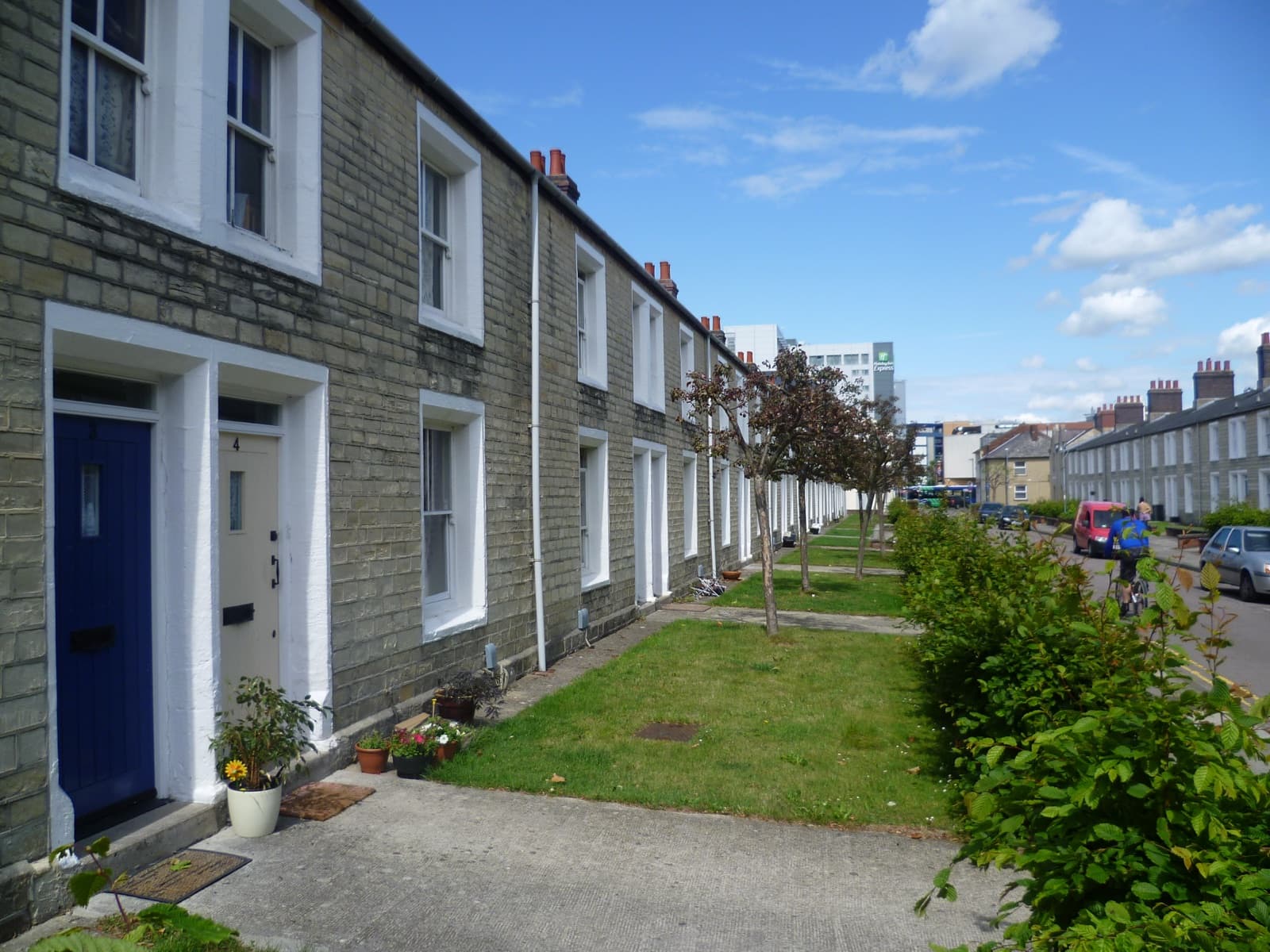
Brunel's model railway village — Grade II listed GWR cottages, the STEAM museum, and the Designer Outlet in the converted works.
The Railway Village is one of the most important pieces of industrial heritage in Britain and the reason modern Swindon exists. When the Great Western Railway chose Swindon for its main locomotive works in the early 1840s, it built an entire model village to house the workforce — a planned grid of limestone terraced cottages laid out around Emlyn Square, just west of the works site.
The GWR Works went on to become one of the largest railway engineering complexes in the world, operating from 1843 until 1986 and covering more than 300 acres at its peak. It transformed Swindon from a country town of around 2,500 people into a booming railway town almost overnight. The company provided its workers not just housing but a church, schools, a medical fund (a forerunner of the NHS), a park, and the Mechanics' Institute.
Today the Railway Village is a conservation area, and the surviving cottages are Grade II listed. The centrepiece is STEAM — the Museum of the Great Western Railway — housed in a restored 1840s workshop within the former works. STEAM tells the story of the GWR, of Brunel, and of the generations of Swindon families who built and maintained the locomotives. Next door, the McArthurGlen Swindon Designer Outlet occupies the beautifully converted main works buildings, with the heritage architecture and original cranes still on show.
The Railway Village is walkable from the town centre and repays a slow wander — the terraces, the park, and the Glue Pot pub give a vivid sense of Victorian Swindon.